

 Mansoorudin Faridi
Are mosques meant only for offering prayers? While this may be the reality today, historically mosques in Islamic societies served multiple purposes and played a much broader role in society.
Lakhs of mosques across India remain underutilised. They could have become important centres for the welfare of the community and the nation at large. Activities beyond prayer were an integral part of Islamic history, a fact that many of us seem to have forgotten.
The social and welfare services carried out during the time of Prophet Muhammad at Masjid Nabawi, the second holiest place in Islam, now sound almost like stories from a bygone era, at least to many Indian Muslims.
H. Abdur Raqeeb of the Indian Centre for Islamic Finance believes that mosques should be used for the common welfare of people.
He points out that many mosques in the West, from the United States to Europe, function as Islamic Centres and community hubs rather than merely places where people gather five times a day for prayers.
Raqeeb says that when people think of Christians, they often recall the vast network of educational institutions and hospitals run by the community. When they think of Sikhs, the tradition of langar immediately comes to mind. But when they think of Muslims, only stereotypical images often emerge.
According to him, Muslims have isolated themselves for too long. However, there was a silver lining during the Covid-19 pandemic, when many mosques opened their doors for public welfare activities.
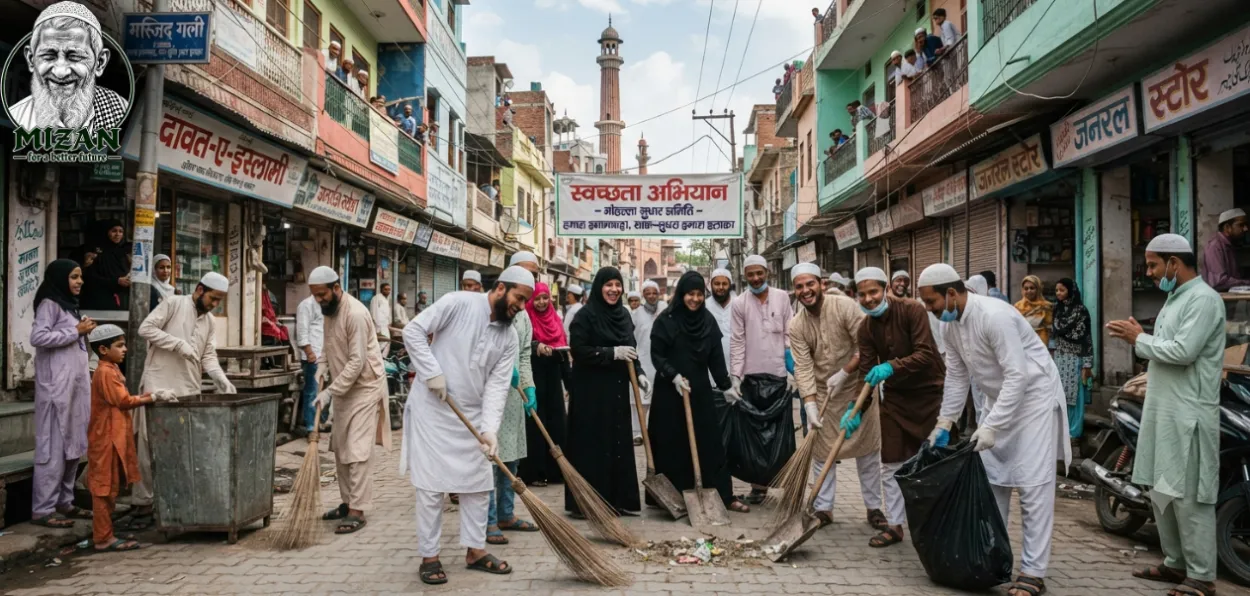
During the pandemic, Muslims organised relief work through mosques. As a result, people from other communities came to see a different side of Muslims and realised the wider role that mosques could play. At the same time, Muslims themselves began to appreciate how these spaces could be put to better use.
There was, in a sense, a revival of the historical role of mosques. Across the world, charity was distributed through mosques, and there was a renewed understanding that the vast premises of mosques could serve many social purposes.
Earlier, there was little awareness about the possibilities of using mosques for public welfare beyond worship. The pandemic helped remove that misconception and encouraged greater openness within the community.
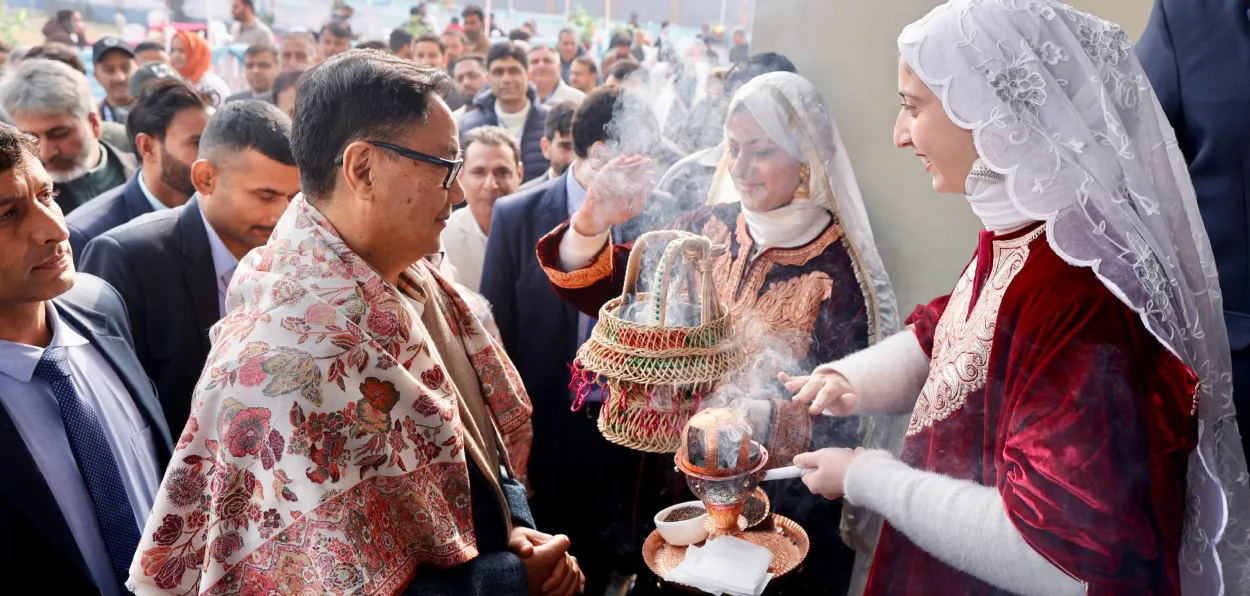
Abdur Raqeeb believes that a closed society ultimately harms itself. He recalls that when former Congress leader G.K. Moopanar was invited to a mosque, he was surprised to discover that Muslims worship without idols or images.
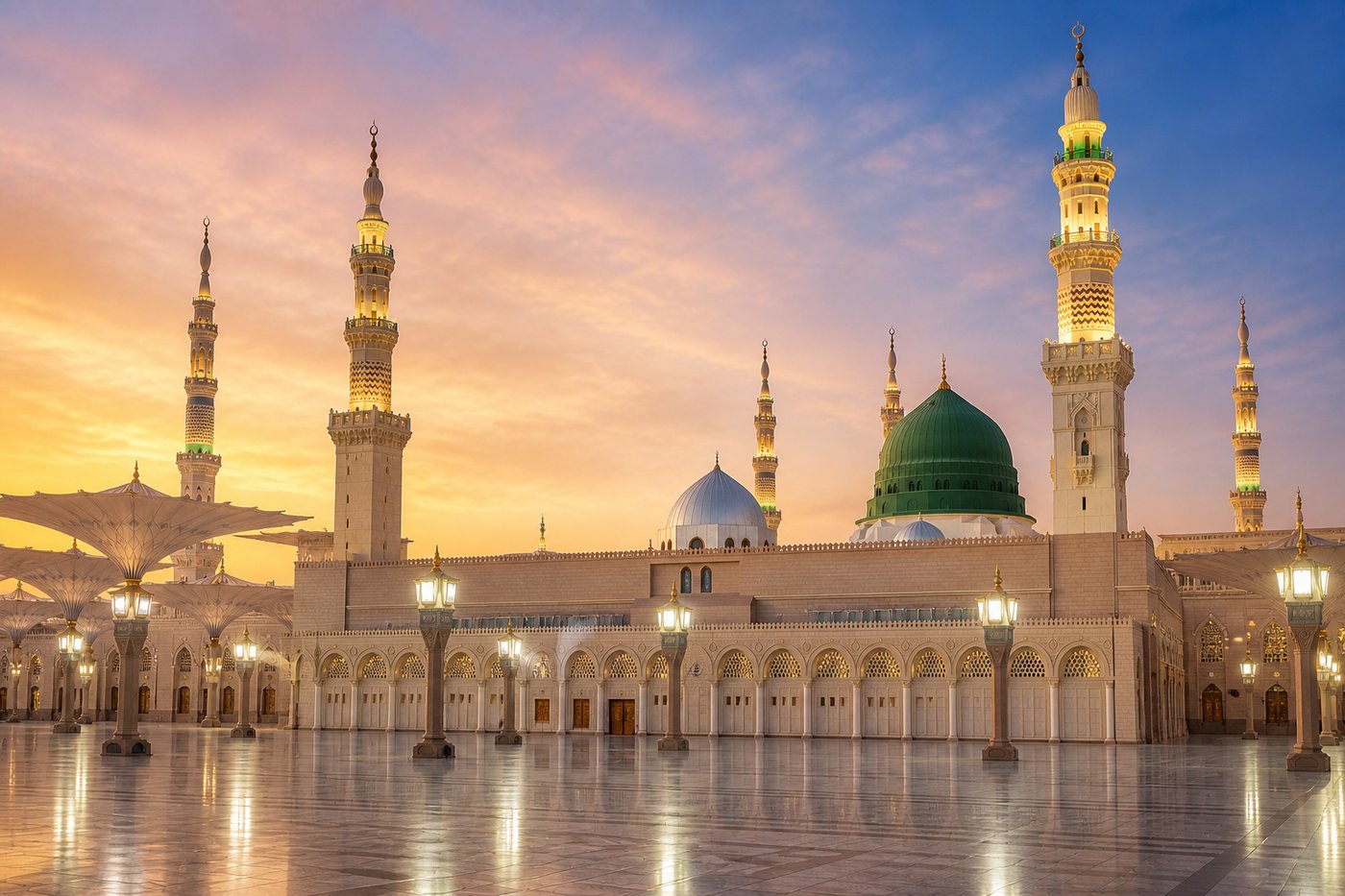 Masjid Nabwi
This came as a surprise because he had never visited a mosque before. Raqeeb argues that mosques should be accessible to people of all faiths. Such openness would remove misconceptions and foster greater understanding. Hindus, Christians, Sikhs, and members of other communities should be invited regularly for interaction and dialogue.
"We only think of a mosque as the House of Allah. Only someone unaware of Islamic history can think of it in such a limited way," he says.
A mosque is a revolutionary institution in Islam. It is like the heart in the human body. As long as the heart functions properly, the body remains healthy; when it weakens, the body weakens as well.
A mosque is not merely a place for obligatory prayers, Sunnah, Nawafil, Itikaf, Qiyam, andSujood. It is also a centre for worship, training, learning, outreach, and service to humanity—something unique to Islamic civilisation.
The importance of the mosque can also be gauged from the fact that the Prophet regarded it as the centre of both personal and collective affairs.
According to a hadith, one day Hazrat Saad bin Ubada invited many people from Suffa for a meal. On another occasion, the Prophet entered the mosque and saw two groups. One group was engaged in Tasbeeh, Zikr, and Azkar, while the other was occupied in acquiring knowledge.
The Prophet observed that both groups were engaged in good deeds, but the group pursuing knowledge was superior. He then joined the latter.
The Prophet also encouraged physical exercise. He organised and attended horse races, camel races, and running competitions, motivating people to participate.
Even today, a mosque near the northern gate of Masjid Nabawi, known as Masjid Sabbak, stands as a reminder of this tradition. In Arabic, Sabbak means participation in a race or competition.
The Prophet would stand at a vantage point and observe the competitors, determining who crossed the finish line first.
Biographers mention that he rewarded the first five winners, often with dates. (Al-Maqrizi: Al-Sharjah wa Al-Athar, Vol. 1)
Today, however, we have largely confined mosques to worship alone. The way mosques functioned during the Prophet's time would surprise many people.
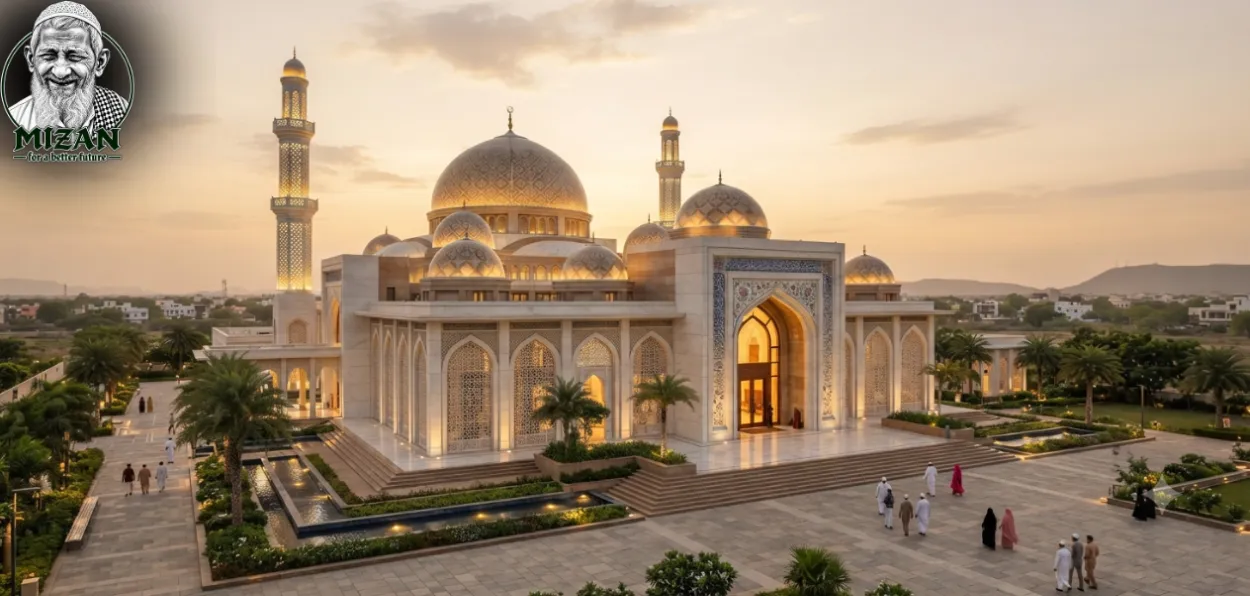
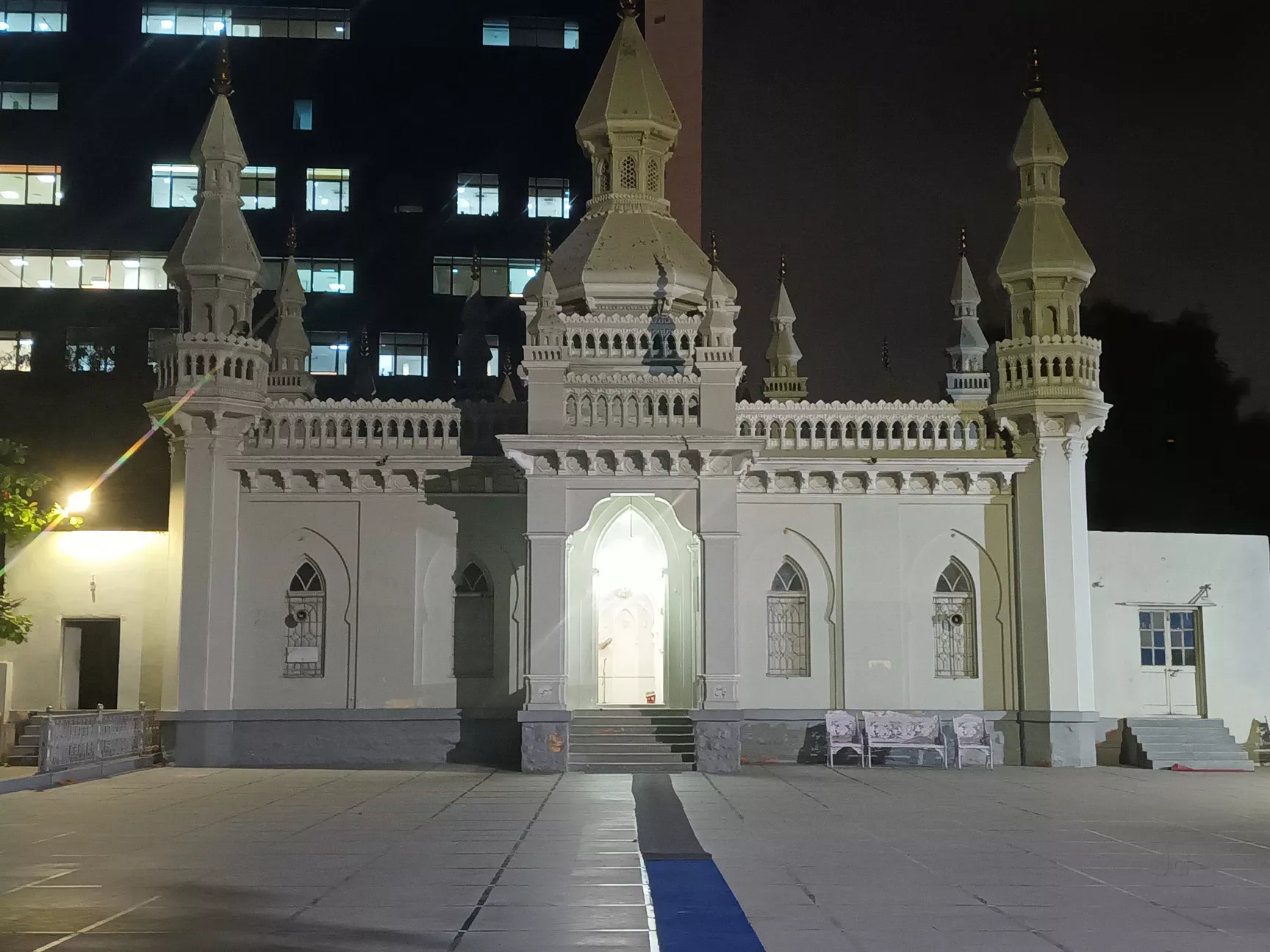 The Hyderabad Mosque
Abdur Raqeeb notes that Friday sermons were delivered from the Prophet's mosque, but the same venue was also used for conferences and discussions.
Hazrat Hassan bin Thabit and other companions recited poetry praising Allah and His Messenger, while also discussing historical events and literary traditions of the pre-Islamic period. References to these activities can be found in Sahih Bukhari.
There were also Abyssinians in Madinah who organised javelin displays and other physical exercises near the mosque on special occasions.
Historical accounts mention that on one Eid, the Prophet watched Abyssinian performers displaying their skills in Masjid Nabawi while Ayesha Siddiqa observed alongside him.
At one time, mosques served as centres for solving every kind of problem. Along with worship, mosque schedules included consultation, welfare work, and community service.
Whenever an important financial matter arose and coincided with prayer time, people would stay back after prayers to discuss it collectively.
Abdur Raqeeb points out that a hospital was established within Masjid Nabawi for injured Mujahideen, where they received treatment and care. Hazrat Rufaidah supervised this initiative.
During the Battle of Khandaq, when Hazrat Saad bin Mu'adh was seriously wounded, a tent was erected for him in the mosque where he could be treated. (Sahih Bukhari)
It is encouraging to see that after the pandemic, medical centres and other welfare services have begun operating from some mosques across India.
While the number of mosques continues to grow, their role remains limited. Muslims can broaden their scope and revive the model established during the time of the Prophet.
A delegation from Najran once visited Prophet Muhammad. He not only welcomed them into the mosque but also allowed the 60-member Christian delegation to perform their worship there.
Maulana Abul Kalam Azad writes that the Prophet often hosted strong-minded opponents of Islam in the mosque. As a result, tribes that could not be won over through conflict were persuaded through dialogue and understanding.
As the saying goes: "An iron sword may strike the head, but nothing is more powerful than the sword of love." (Jami al-Wahid, p. 19)
Today, debates often centre on whether women should be allowed into mosques. During the Prophet's time, however, the reality was quite different.
Abdur Raqeeb notes that women regularly attended congregational prayers in the Prophet's mosque.
Even today, Bab al-Nisa (Women's Gate) exists in Masjid Nabawi. The Prophet would sometimes address the men and then specifically meet the women to offer guidance and advice.
Historical accounts mention that women regularly attended Fajr, Maghrib, and Isha prayers in congregation.
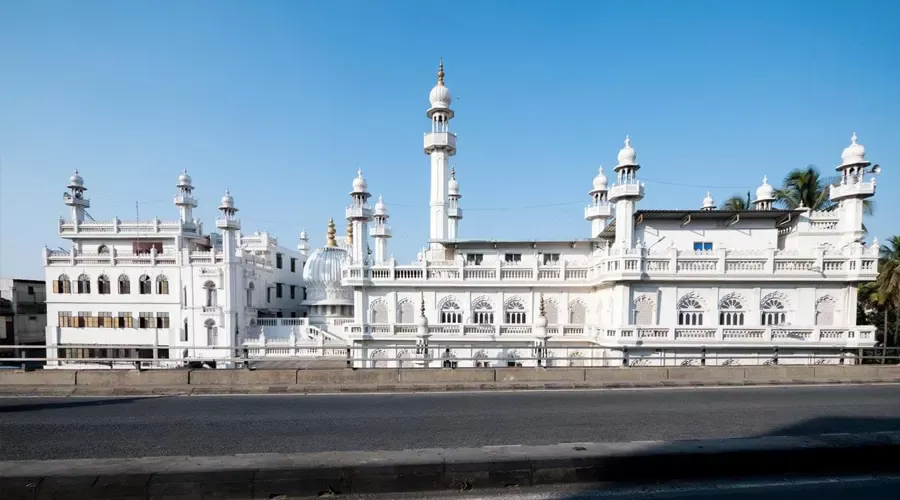 The Bangaluru mosque
According to Raqeeb, the Prophet also used the mosque as a place of justice. Legal disputes were heard there in the presence of litigants, defendants, witnesses, and members of the public. Judgments were delivered openly, making it, in effect, an open court accessible to everyone.
A look at the activities of Masjid Nabawi reveals how different it was from most mosques today.
Modern mosques are often reserved exclusively for worship, with little space for serving God's creation as a form of serving God Himself.
Once prayers are over, the mosque doors are often closed. Perhaps it is time to utilise these institutions, built with immense resources, more effectively for the benefit of humanity.
To revive the concept of the active mosque that existed during the Prophet's era, mosques must once again become centres of community life and human activity.
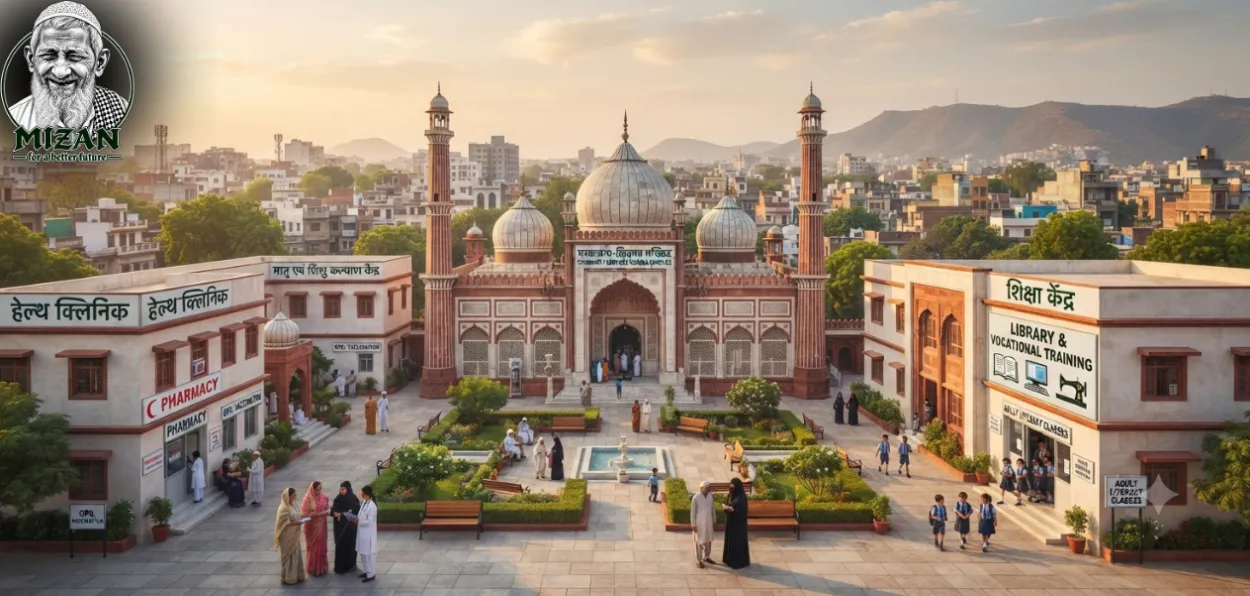
For example, every mosque should have a well-equipped library. In today's world, knowledge can be disseminated through audio-visual resources, computers, and digital platforms at relatively low cost.
The City Jama Masjid in Bangalore, for instance, has made commendable arrangements for general education, technical training, and adult education.
Mosques should also facilitate the collection and distribution of Sadaqah and Zakat.
One challenge is the limited income of many mosques. Developing shops around mosque premises and generating rental income could be one solution. Revising rents for existing commercial properties on Waqf land may be another.
Provision could also be made for rooms that can function as coaching centres for young men and women.
Ironically, while many lectures and gatherings focus on the virtues and rituals of Hajj and Umrah, there is often less discussion on Zakat and Sadaqah, which directly address poverty and social welfare.
Each mosque could maintain a database of needy families and help them obtain benefits such as BPL cards and other welfare entitlements. Mosque premises could also be used by knowledgeable community members to guide the poor, disabled, and marginalised in accessing government schemes.
Clearly, there is a need to expand the scope and role of mosques. There are many ways to achieve this, provided we are willing to think creatively and act collectively.
Interestingly, public attitudes are already beginning to change. Many multi-storeyed mosques across the country have started establishing gymnasiums and fitness facilities. This is a significant and positive development.
Physical fitness is an essential part of life and a guarantee of good health. We often forget that alongside education, the Prophet also encouraged physical training for his companions.
ALSO READ: Why are Indian Muslims’ religious places involved in legal conflicts?
If mosques across India begin to emulate the all-encompassing functions of the Prophet's mosque, these can contribute to the social growth of Muslims and change public perceptions.
The author is Editor, Awaz-the Voice, Urdu