




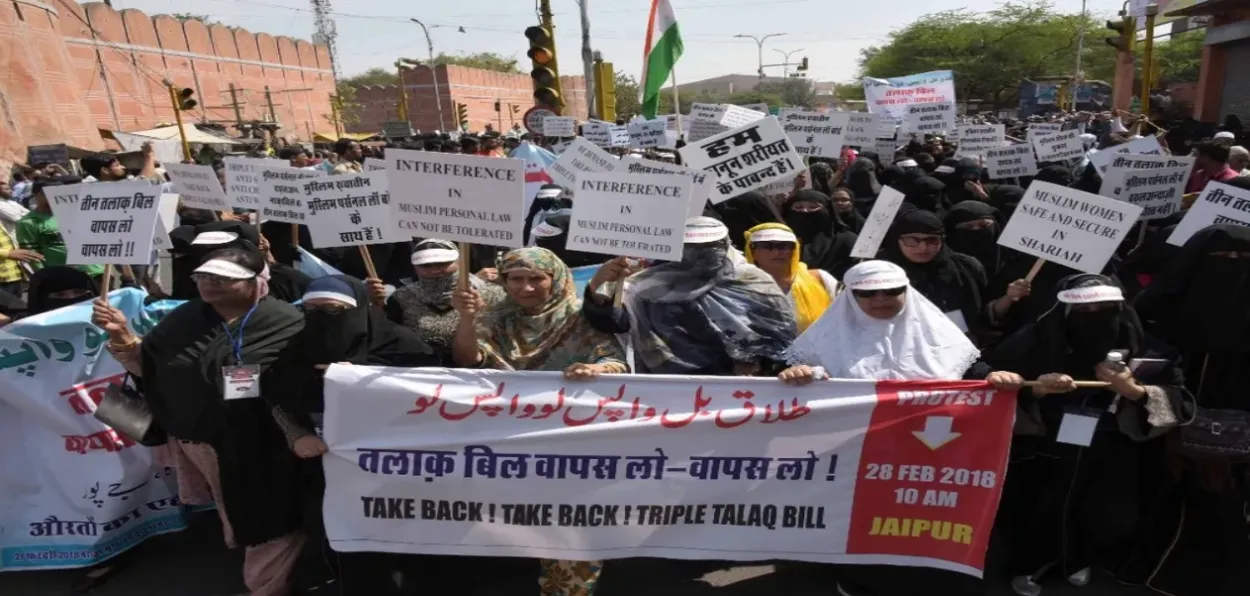
New Delhi
The All-India Muslim Personal Law Board’s (AIMPLB) ‘Save India, Save Shariat’ campaign has drawn criticism from a group of 92 Muslim civil society leaders, women’s rights activists, intellectuals and others, who have questioned its approach to personal law and called for gender justice and meaningful legal reform.
The group has also urged civil society organisations and political parties to intervene in the debate over the proposed Uniform Civil Code (UCC) to ensure that any such law is based on equality and human rights.
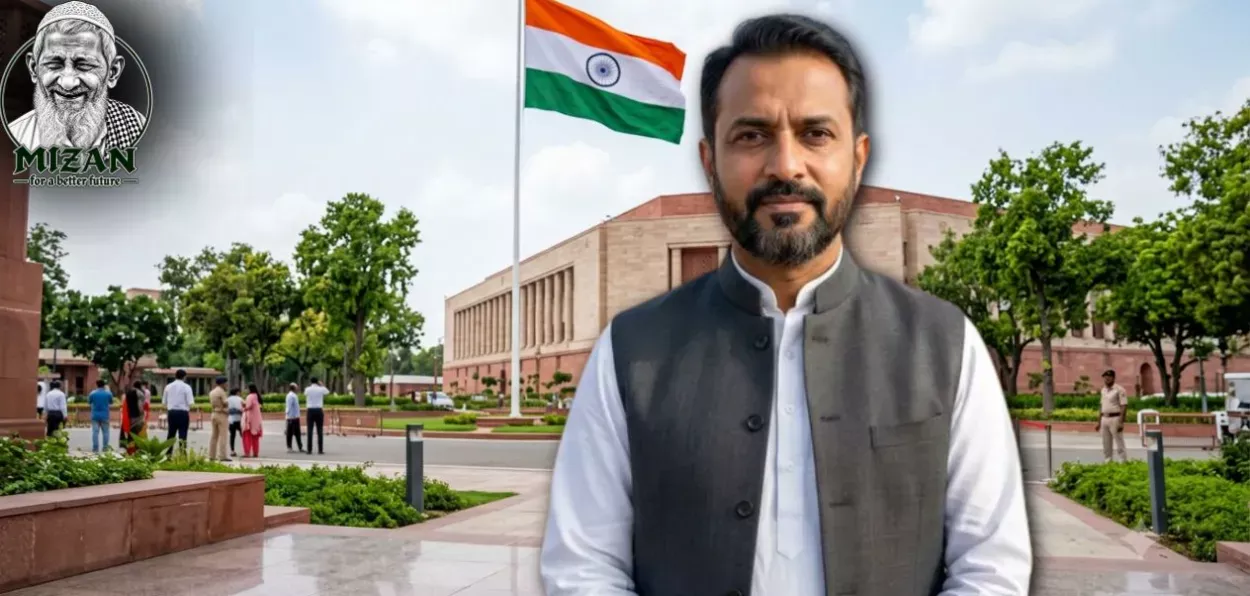
“We call upon all progressive forces, civil society organisations, and secular political parties to intervene actively to ensure that the demand for a gender-just, religion-neutral Uniform Civil Code is rooted in equality and human rights, rather than weaponised for communal division,” says a statement initiated jointly by Javed Anand and Feroze Mithiborwala of Indian Muslims for Secular Democracy (IMSD), Zakia Soman and Noorjahan Safia Niaz of Bharatiya Muslim Mahila Andolan (BMMA), Shamsuddin Tamboli of Muslim Satyashodhak Mandal and Bader Saeed of Roshni.
The signatories include actors Naseeruddin Shah, Amol Palekar, Ratna Pathak and Mallika Sarabhai, as well as Zeenat Shaukat Ali, Sultan Shaheen, Teesta Setalvad, Ram Puniyani and Tushar Gandhi, among others.
The statement says the signatories “strongly oppose the ill-conceived nationwide ‘Save India, Save Shariat’ campaign launched by the All-India Muslim Personal Law Board (AIMPLB).”
According to the statement, the campaign could “give the BJP and the sangh parivar a platform to posture as defenders of constitutional norms” and reinforce what the signatories describe as a false narrative that Indian Muslims reject the law of the land.
The signatories argue that what is commonly described as Shariat law in India largely operates through personal laws shaped by historical and patriarchal interpretations. They cite AIMPLB submissions before the Supreme Court, including arguments concerning divorce rights, to challenge what they describe as gender-discriminatory provisions.
The statement refers to an AIMPLB argument that husbands were more suited to exercise decision-making in matters of divorce because men allegedly have “greater power of decision-making” and “control emotions”. It also cites the Board’s argument that without a quick separation option, a husband “may resort to illegal, criminal ways of murdering or burning her alive”.
The signatories describe this as a disturbing justification for domestic violence. They also point to a passage in which, according to the statement, the Board acknowledged that “India is a patriarchal society, and therefore personal laws of all communities are aligned with the patriarchal notion…”
The group further accuses the AIMPLB of selectively invoking Articles 25 to 30 of the Constitution, which protect religious freedom and minority rights, while overlooking Articles 14 and 15, which guarantee equality before the law and prohibit discrimination on grounds including sex and religion.
The statement also points to reforms in Muslim-majority countries such as Pakistan, Bangladesh, Tunisia and Morocco, arguing that several have codified or reformed family laws to strengthen women's rights. It notes that millions of Muslims live in secular democracies with uniform family laws without, in the signatories’ view, placing Islam itself in jeopardy.
The activists say the failure to reform and codify Muslim personal law has left Indian Muslims facing a continuing legal and social predicament.
They call for family-law reforms that would guarantee Muslim women equal rights in areas including the minimum age of marriage, polygamy, divorce, inheritance, child custody and adoption, besides measures against female genital mutilation and halala.
The statement also criticises both major political approaches to the UCC debate. It says secular parties have often failed to adequately support Muslim women’s civil rights, while alleging that the BJP and Hindu Right raise the issue primarily in the context of communal polarisation.
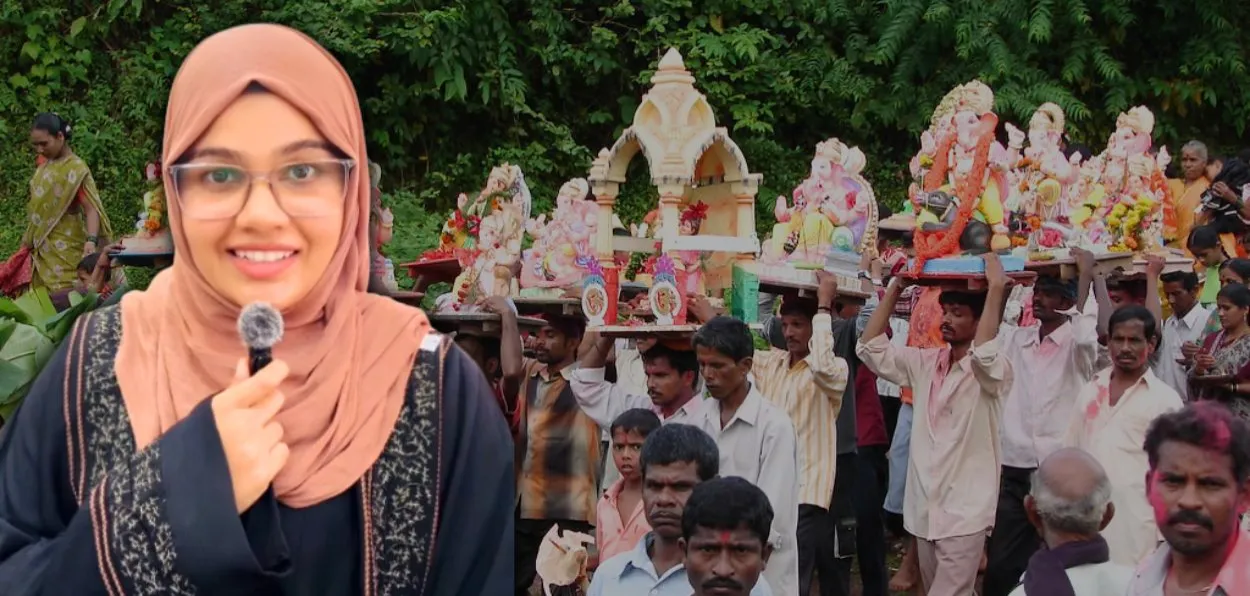
ALSO READ: Digital creator Khadija Naik relives memories of Konkan's Ganeshotsav
“The sangh parivar sheds crocodile tears for Muslim women while ignoring relentless hate speech (love jihad, land jihad…) and hate crimes—mob lynching, bulldozing homes, demolishing masjids, and economic boycotts, with chants of Jai Shri Ram to strike fear and intimidation,” the statement says.
The signatories also raise concerns about what they describe as state actions affecting Muslims, including the Waqf Amendment Act, anti-conversion laws and the use of the Special Intensive Revision (SIR) of electoral rolls, which they allege could disenfranchise large sections of the electorate.









.webp)